
Starting counselling
When Is the Right Time to Start Counselling?
எப்போ பேசலாம்? — When can we talk?
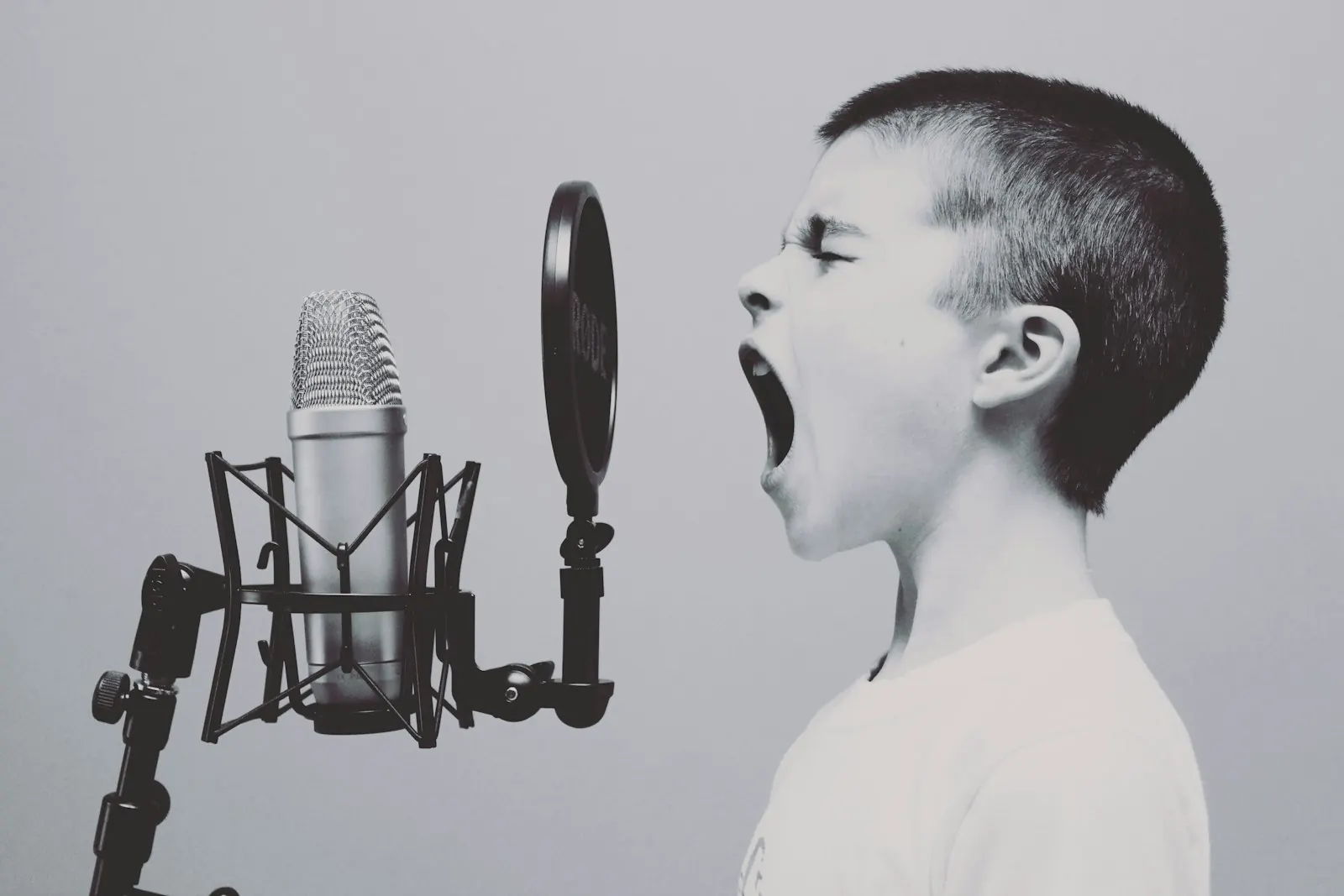
Most people who come to counselling spend months, sometimes years, asking themselves one quiet question first. Is my problem big enough? They picture counselling as a place for people who have truly fallen apart, and measure their own trouble against that picture, and decide it does not yet count.
That measuring is where a lot of unnecessary suffering hides. You do not need to be in crisis to talk to someone. You do not need a diagnosis, a referral, or the right words. You only need a sense that something has been sitting heavy for a while, and a willingness to set it down for forty-five minutes.
Key takeaways
- You do not need a crisis to start counselling; a returning sense that something is off is reason enough.
- In India, roughly 150 million people need mental health care, but fewer than 30 million seek it (NMHS 2015-16, NIMHANS).
- A first session is an unhurried 45-minute conversation, in Tamil or English, fully confidential.
- Psychotherapy works: about 41% respond by two months, against 17% with usual care (Cuijpers et al., 2021).
- Earlier help is gentler. Delays of months are common and costly.
How do you know it’s the right time?
The right time is earlier than most people think. You do not have to wait for a breakdown, a diagnosis, or permission. If a worry keeps returning, if your sleep, mood, or relationships have shifted for weeks, that returning is itself the signal. In India, fewer than 30 million of the roughly 150 million who need care actually seek it (NMHS 2015-16, NIMHANS).
Sit with that gap. It means most of us carry things far longer than we need to, often alone, often blaming ourselves for something that has both a name and a way through.
So how do you tell an ordinary rough patch from something worth talking about? You watch the pattern, not the single bad day. One hard week is human. Several weeks where the heaviness will not lift, where you are pulling away from people and from your own life, is different.
[IMAGE: a still riverbank at dawn where a heron stands in calm water - search “heron still river dawn calm”]
Signs it may be time
A few quiet markers tend to show up together. None of them is a verdict. They are simply worth noticing when they hold steady.
- Something has weighed on you for more than two or three weeks and is not lifting.
- Sleep, appetite, or energy have changed without a clear physical cause.
- You find yourself snapping at people you love, or withdrawing from them.
- A worry loops in your head and you cannot talk it through with anyone.
- You keep asking whether you should “just deal with it” alone.
If you recognise yourself in two or three of these, that is enough. The question “should I talk to someone?” rarely visits people who do not need to.
Why does waiting cost so much?
Waiting is expensive in ways that are easy to miss. The longer a difficulty sits untended, the deeper its grooves run into sleep, work, and relationships. In one South India study, people with severe mental disorders took a median of about 30 days to reach first care, and roughly 180 days passed between their first and second contact with help (Puducherry pathways study, 2021).
Six months between steps. That is not unusual here. The delay is rarely about not caring. It is about not knowing where to start, fearing what people will say, and quietly hoping the trouble will pass on its own.
Sometimes it does. Often it does not, and what might have been a single tangled thread becomes a knotted rope. Early counselling is not about treating something dramatic. It is about catching a small thing while it is still small, before it has rearranged your days around itself.
[UNIQUE INSIGHT] The people who benefit most are often not in crisis at all. They arrive with something ordinary and unfinished, a grief that did not move, a worry that grew teeth, a marriage drifting quietly apart. Caught early, these are workable. Left for years, they harden into the very crises people imagine counselling is reserved for.
மனசோடு பேசலாம் — let us talk, heart to heart.
What is a first session actually like?
A first session is calmer than most people expect. There is no couch, no confession, no test to pass. It is a single unhurried conversation, about forty-five minutes, held in Tamil or English, whichever feels more like home. You talk, the counsellor listens, and together you begin to see what has been sitting underneath.
[PERSONAL EXPERIENCE] In practice, the first few minutes are usually the hardest, and the rest comes more easily than people fear. Many arrive certain they will not know what to say, then find the words slowly surface once someone is genuinely listening, without hurry and without judgement.
You do not have to perform. There are no long forms to fill in to prove your suffering is real. You will not be handed a label or a diagnosis on the spot, and you will not be pushed to decide anything you are not ready to decide. If you want to come once, simply to see how it feels, that is a perfectly good reason to come.
What you might talk about
There is no script. Some people start with the thing that has been pressing on them for months. Others begin somewhere small and circle in slowly. Both are fine. The counsellor’s job is to follow your pace, ask the questions that help, and hold the space steady while you find your footing.
What happens after
Nothing is decided for you. At the end, you might agree to meet again, or take time to think, or simply leave lighter than you came. Whether one conversation is enough or the start of a few is entirely yours to choose. The door stays open either way.
[IMAGE: two empty chairs near a window with soft daylight - search “two chairs window calm light”]
Does counselling really work?
Yes, and the evidence is steady rather than dramatic. In a large 2021 meta-analysis, about 41% of people improved within roughly two months of psychotherapy, compared with about 17% receiving usual care, meaning roughly one in five was helped who otherwise would not have been (Cuijpers et al., 2021). Talking is not only comfort. It is a working method.
The benefit holds across many kinds of talk therapy. A network meta-analysis found that several approaches, including cognitive behavioural therapy, interpersonal therapy, behavioural activation, and problem-solving, showed moderate-to-large benefit over no treatment, with an effect size of about d = 0.66 (network meta-analysis, 2013). In plain terms, different doors lead to the same quiet room.
What good counselling actually does is simple to describe and slow to happen. It gives the trouble a shape and a name. It slows the racing thoughts long enough to see them. It helps you notice the patterns that keep pulling you down, and practise gentler ones. Over weeks, the riverbed begins to show through the moving water.
Common questions
Is my problem big enough for counselling?
Almost certainly, yes. There is no minimum amount of suffering you must reach first. People come for grief, stress, a strained marriage, a restless mind, or simply a heaviness they cannot name. If it has bothered you for weeks and you keep thinking about talking to someone, it is big enough.
What does a session cost?
A session is ₹500 for about 45 minutes. There are no forms to fill or packages to commit to before you begin. You can come once to see how it feels, then decide whether to return. The cost is kept deliberately modest so that money is not the reason someone waits months before reaching out.
Is what I say confidential?
Yes, completely. What you share in a session stays in the room. Confidentiality is the foundation that makes honest talk possible, and it is taken seriously. The only rare exception, common to all counselling, is a clear risk to your life or someone else’s, where keeping you safe comes first. Otherwise, your words remain yours.
Do I need a diagnosis or a doctor’s referral?
No. You do not need a referral, a diagnosis, or a label of any kind to start. You can simply reach out and book a time. Counselling is not gatekept behind paperwork. If a doctor is ever needed, that becomes clear gently, together, over the course of talking, never as a barrier to beginning.
A quieter ending
The heron does not rush the river. It stands still in the moving water and waits, and when the surface finally settles, the riverbed shows itself. Clarity rarely arrives by force. It arrives when something is given the stillness to settle.
That is what a first conversation offers. Not a cure, not a verdict, just a quiet hour where the water can begin to calm with someone sitting beside you. If you have been asking whether it is time, the asking has already answered you. The right moment to talk is usually a little sooner than we let ourselves believe.